

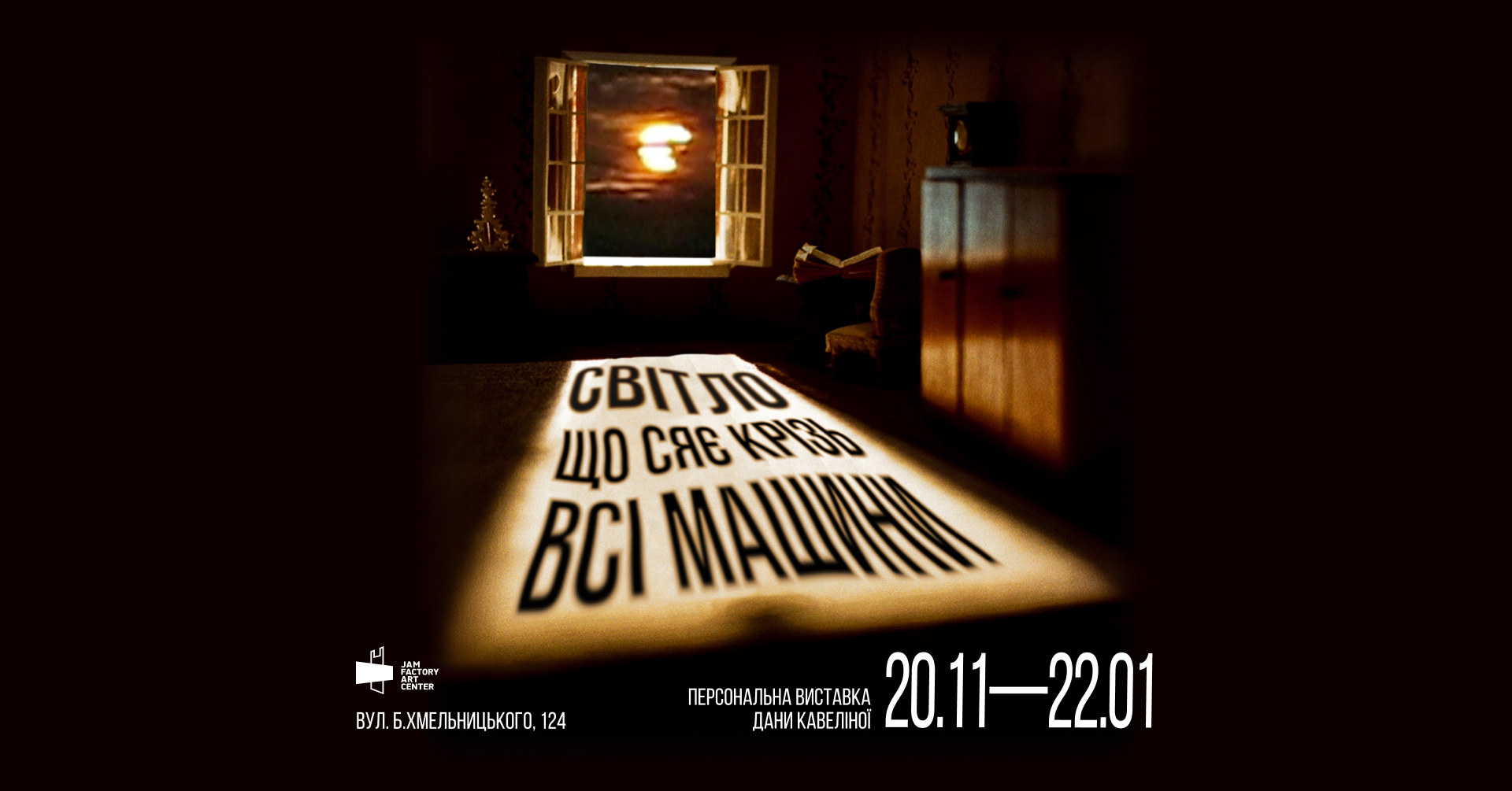
On 20 November 2026, Jam Factory Art Center in Lviv will open Light that shines through all the machines, the first solo exhibition of artist Dana Kavelina in Ukraine.
Spread across two floors of the Jam Factory Art Center, the exhibition features four films and an installation created specifically for the exhibition.
Curatorial team: Alex Fisher, Ksenia Malykh, Asia Tsisar
About exhibition
Light that shines through all the machines will be the first comprehensive survey of Dana Kavelina’s artistic practice. Featuring her earliest and most recent films, the exhibition at Jam Factory Art Center will allow visitors to trace the development of her artistic approach.
‘In one of Dana’s films, someone asks: “When should I look at the moon or read poetry if I must learn from history all the time?” While preparing her exhibition, this question has echoed in my head. Hearing it over and over, I have come to believe that this question speaks to what is at stake in her practice, giving voice to what she is searching for. Surveying the work that she has created thus far, I see an artist who is trying to satisfy what history demands of her without sacrificing her freedom to revel in what fills her with wonder,’ says Alex Fisher, co-curator of the exhibition.
In her work, Dana Kavelina explores how human and other beings come to understand, remember, and relate to history—and realize their (in)capacities to affect historical change. She addresses sensitive topics from a position of critical proximity, avoiding abstract, bird’s-eye views in favor of perspectives from the courtyard, street, living room, and field.
Screening these films side by side, the exhibition invites viewers to consider not only what their characters say and think, but also where, how, and when they do so.
‘Dana’s practice creates a rare space of safe empathy—a territory where traumatic experience does not re-inflict pain, but opens a doorway to compassion. Even when touching upon the most painful fractures of history or the present, she keeps the human being at the core: their vulnerability, fragility, and dignity. Immersing oneself in Dana’s world is a challenging yet healing journey toward the other, through which we reclaim the capacity to be more profoundly, more humanly present in this world,’ notes Ksenia Malykh, co-curator of the exhibition.
A separate part of the exhibition will feature a large-scale installation created by Dana Kavelina in collaboration with Anna Nykytiuk and Dania Lastivka specifically for Jam Factory Art Center. The installation presents what has gone into and inspired her projects while testing how these elements might gain new purpose—independently of what they were originally created for and, perhaps, independently of the artist.
Opening hours and ticket prices
Exhibition schedule: 20 November 2026 – 22 January 2027
Opening hours: Mon – closed, Tue-Fri 12:00-20:00, Sat-Sun 11:00-20:00
Tickets can be purchased at the Art Center’s reception. Every Tuesday, entry is free for all visitors.
- Tickets: 200 UAH
- Half-price tickets for schoolchildren, students, internally displaced persons and senior citizens.
- Free entrance for children under 7 years old, people with disabilities, veterans, military personnel, students of the Academies of Arts, Trush College, and Lviv cultural studies departments.
The exhibition operates during power outages.
About Dana Kavelina
Dana Kavelina (born 1995 in Melitopol; lives in Lviv) primarily works with animation and video as well as installation, painting, and graphics. She graduated from the Graphics Department of the National Technical University of Ukraine.
In her character-driven practice, she explores how human and other beings come to understand, remember, and relate to history—and realize their (in)capacities to affect historical change. Her work The Lemberg Machine was the focus of a solo show at Galeria Labirynt in 2025. Her works have been featured in numerous group exhibitions, including at the Jam Factory, Museum of Modern Art in New York, and Jewish Museum Berlin.
Her works have also been featured in festivals and biennials, including the Kyiv Biennial, and Matter of Art. Her works are in the collections of the Museum of Modern Art in New York and Museum of Modern Art in Warsaw, among others.
She has taught in Germany and presented on different stages in Europe, the United States, and Japan. Her writings have been published on multiple platforms. She won the Main Prize at the 7th edition of the PinchukArtCentre Prize and was shortlisted for the 2024 edition of the Future Generation Art Prize.
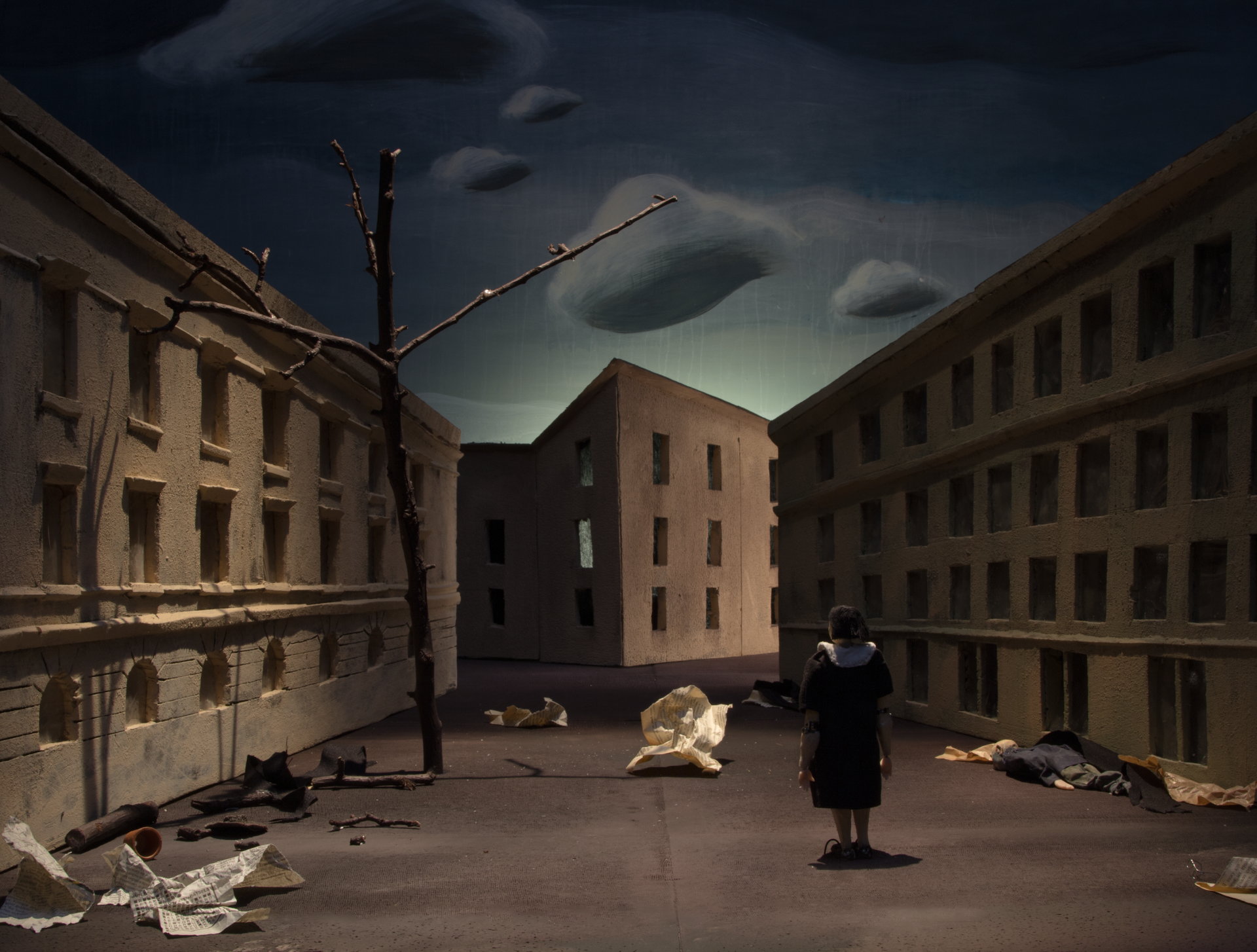
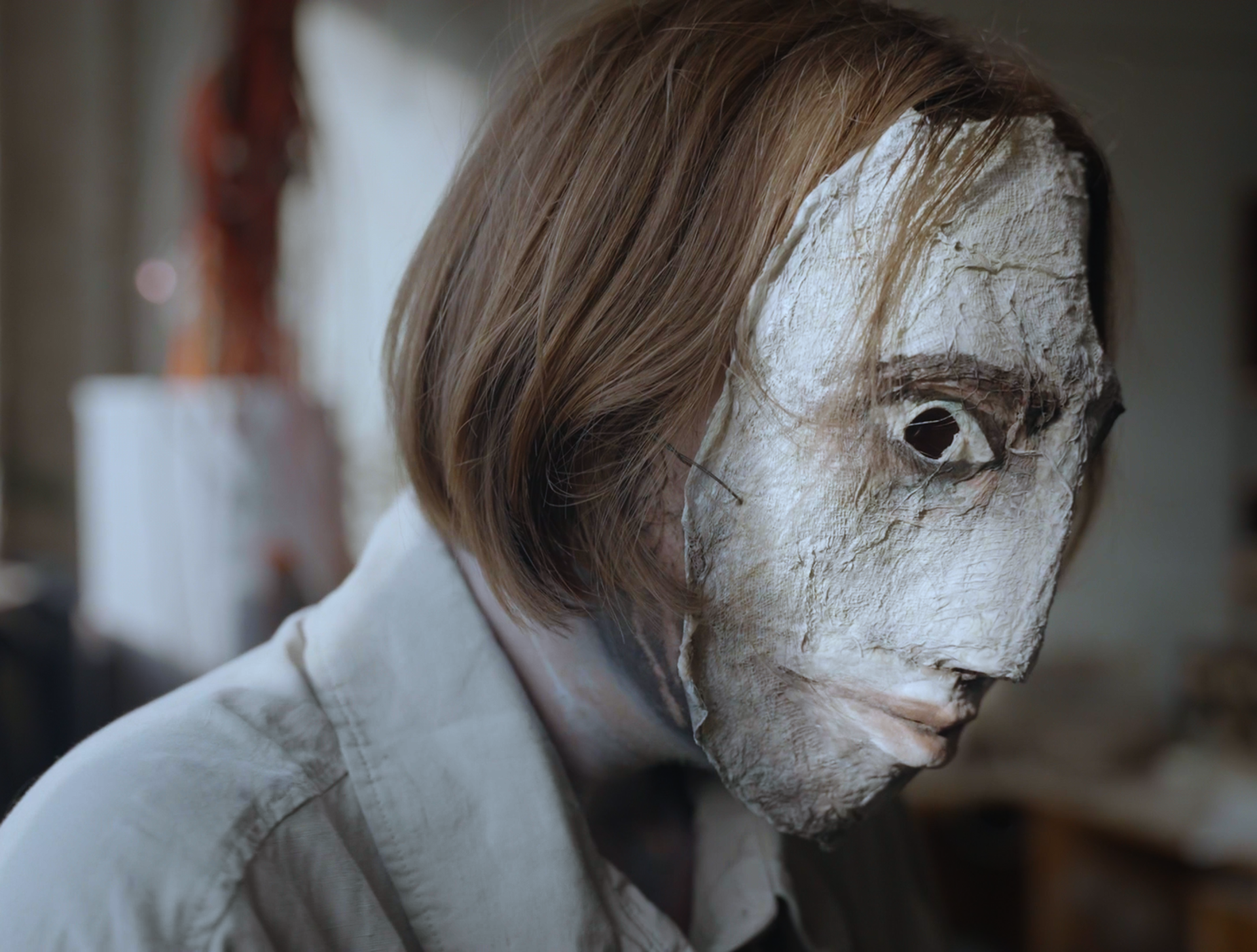
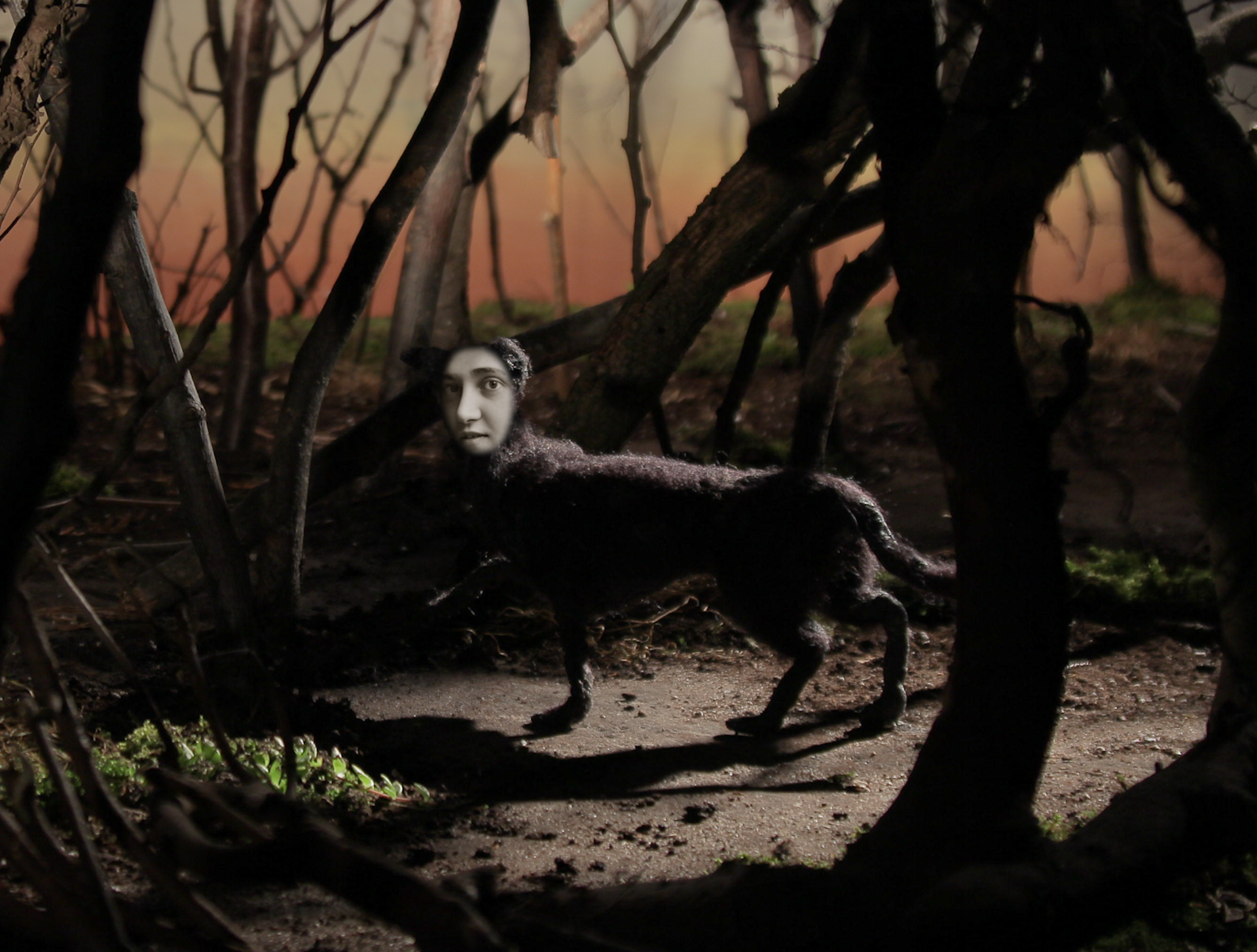
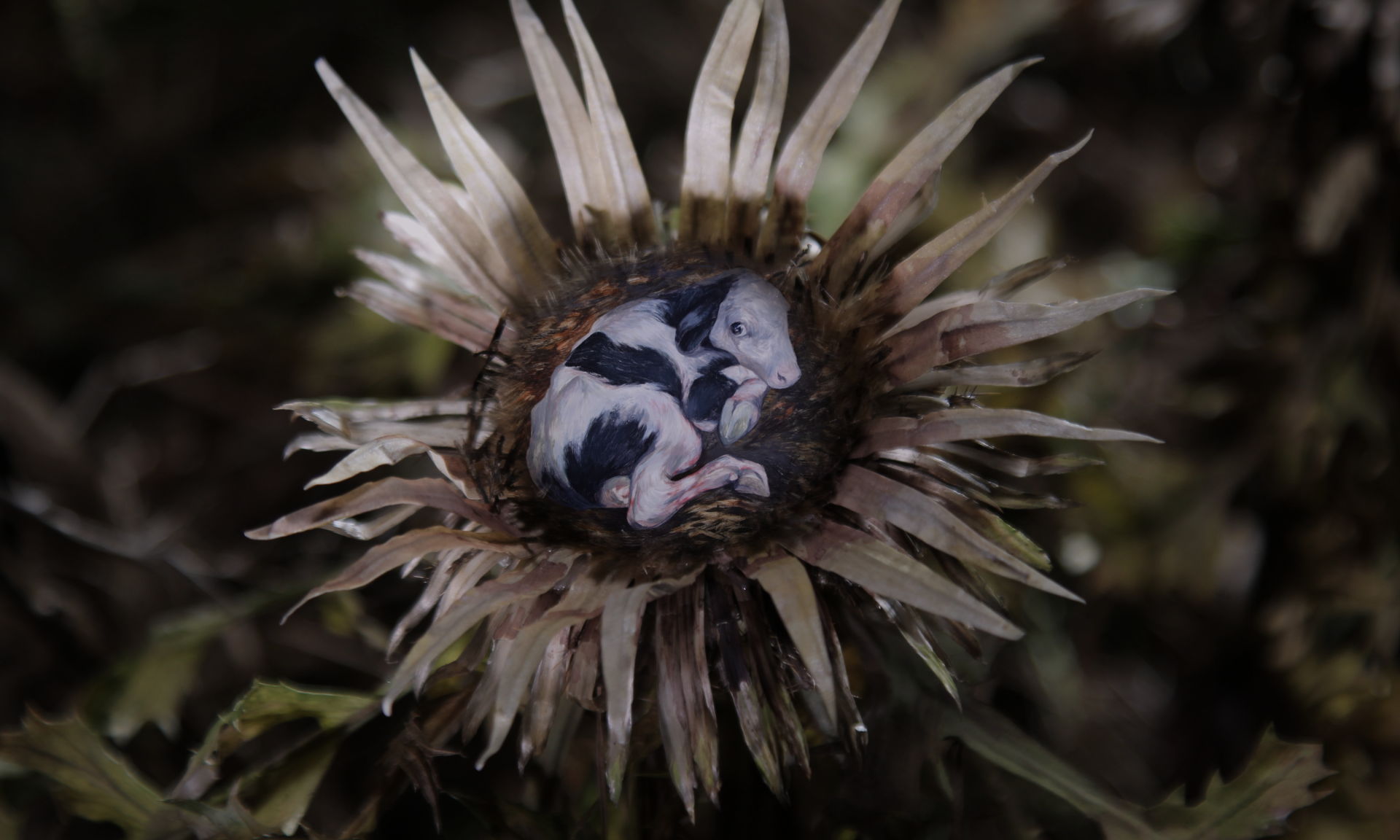
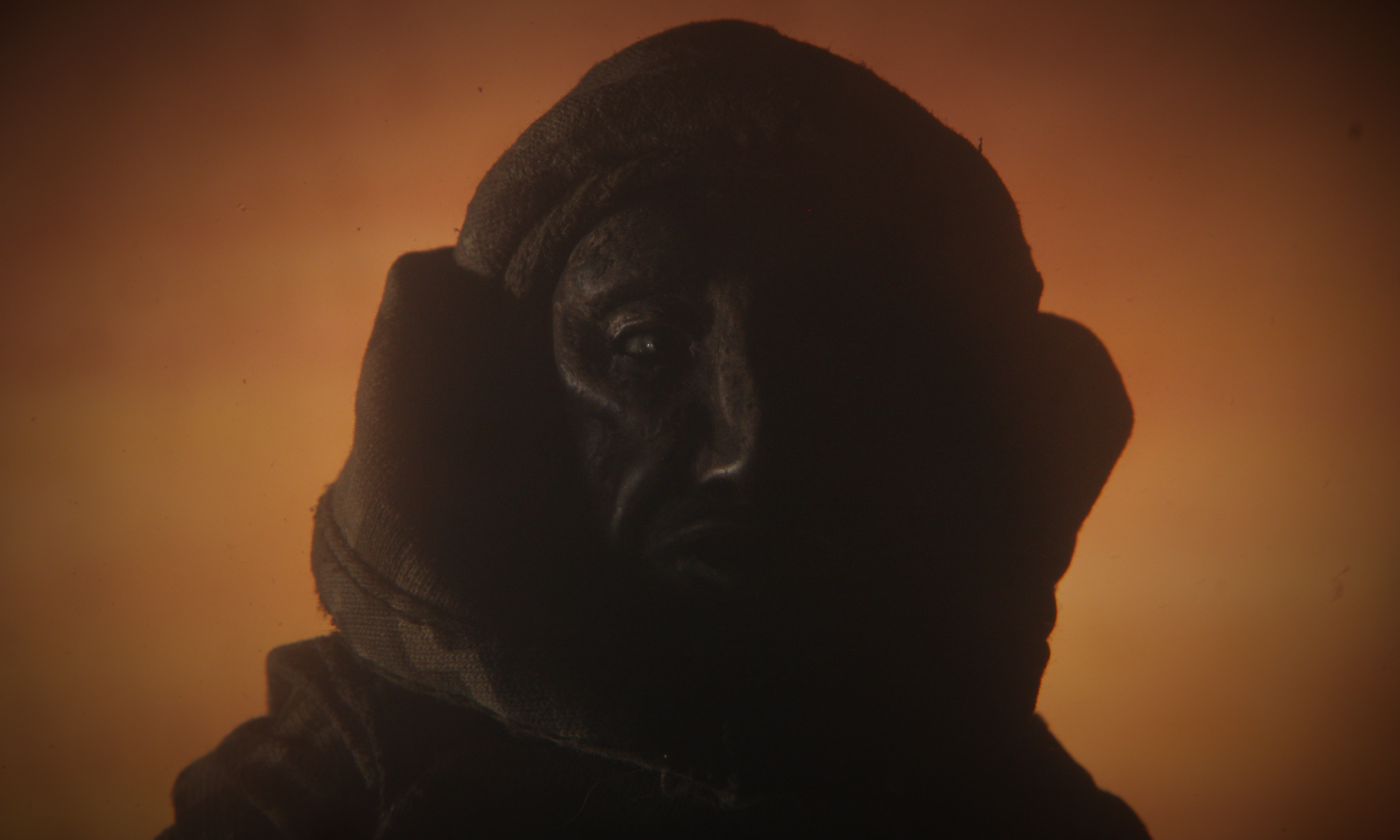
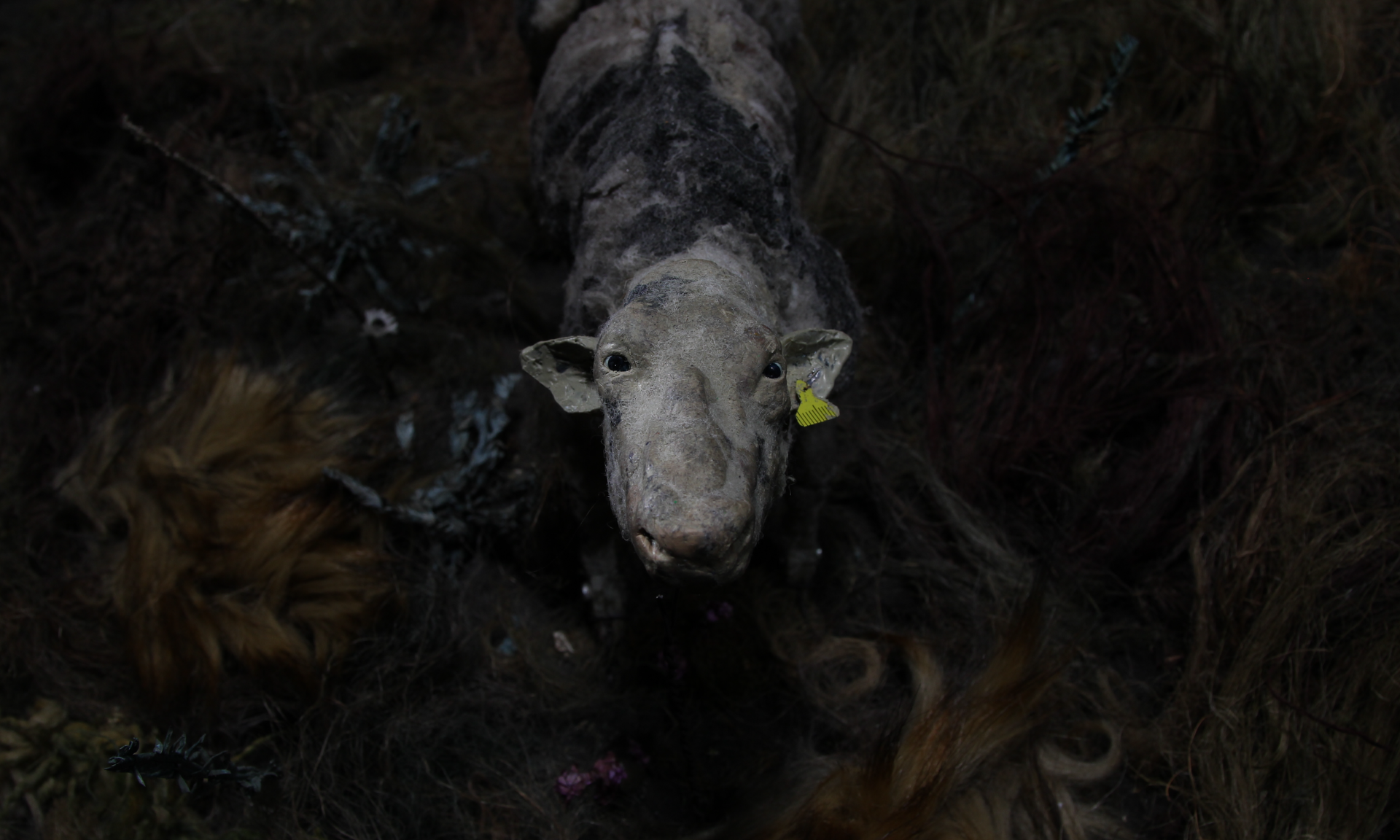
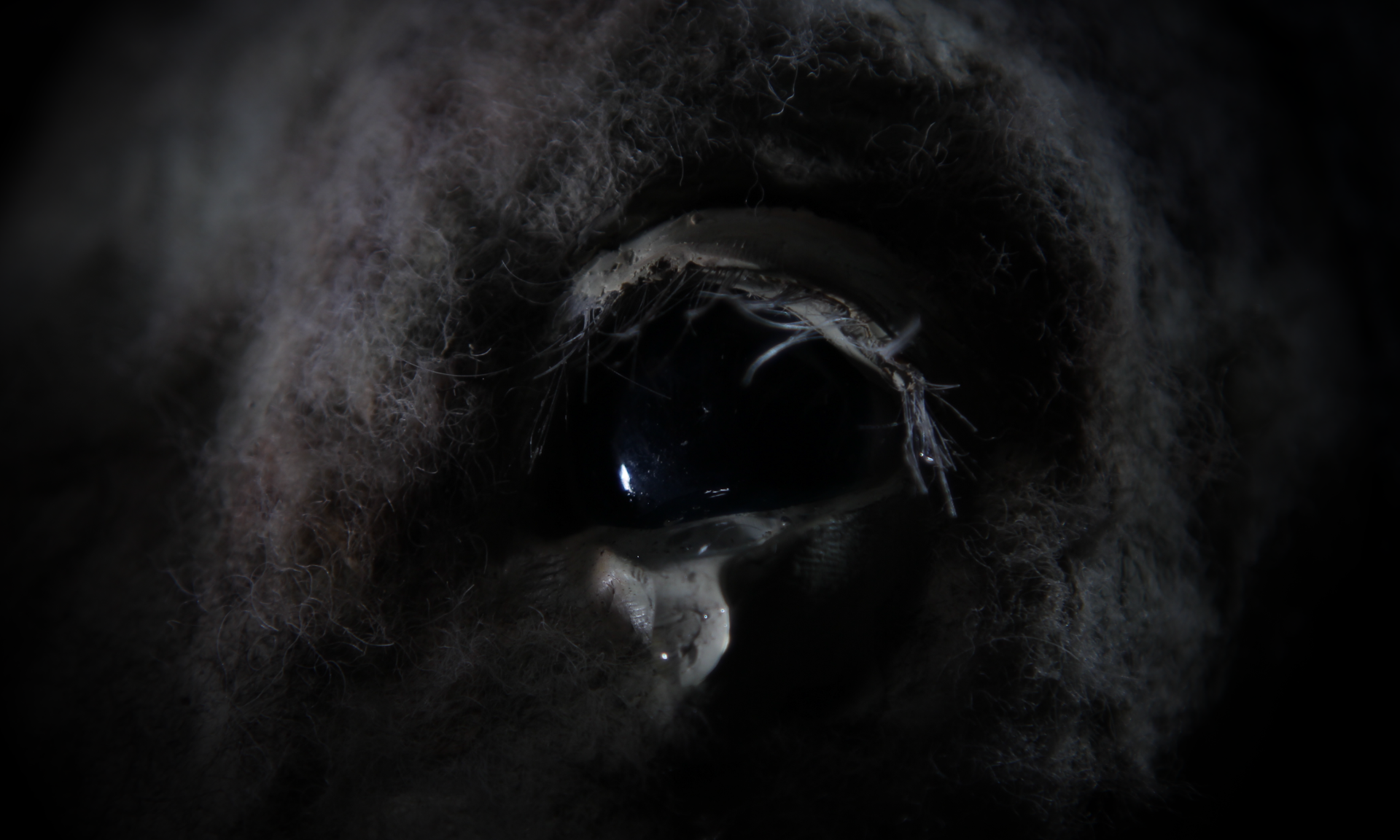
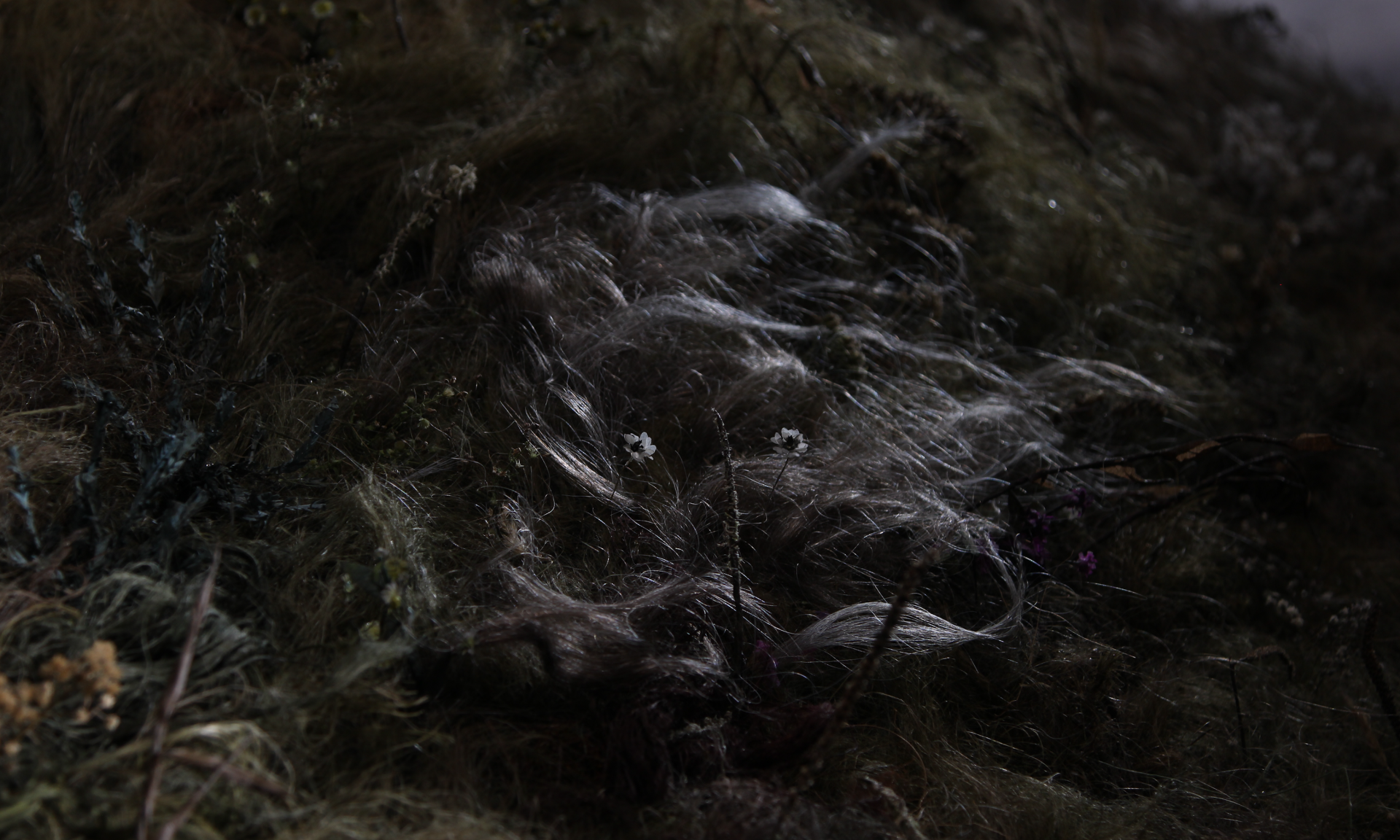
Stills from works featured in the exhibition
“I don’t work with the production of historical knowledge, of course. I work with the writing machines, the machines of historical narration, with narratives and imagery, and what I do is produce resemblance and difference, and a kind of strange solidarity between the victims of different epochs.”
“The truth of history for me is not about the facts, but about how we describe these facts, who writes these facts, who describes history.”
Dana Kavelina
Light that shines through all the machines is an exhibition of multiple firsts—Dana Kavelina’s first solo show in Ukraine, as well as the first survey of the Melitopol-born, Lviv-based artist’s practice. Spread across two floors of the Jam Factory Art Center, the exhibition features four films and an installation. Including her earliest and most recent films, the selected works trace the arc of her career. Together, they reveal an artist who is restlessly experimental, extraordinarily attentive to detail, and highly collaborative. They also reveal an artist who addresses sensitive topics from a critical proximity, avoiding abstract, bird’s-eye views in favor of perspectives from the courtyard, street, living room, and field. Screening these films side-by-side, the exhibition invites viewers to consider not only what their characters say and think, but also where, how, and when they do so. The same invitation extends to the installation. A new commission, the installation presents what has gone into and inspired her projects while testing how these elements might gain new purpose—independently of what they were originally created for and, perhaps, independently of the artist. Taking its cue from Kavelina, the exhibition is thus all about resemblance and difference. About the resemblance and difference between works. And about the resemblance and difference between what a work is, or was, and what it might become.
(Quotes from Kavelina’s presentation at The Collective Body Dismembered symposium in 2022)
Stills from works featured in the exhibition

Curatorial team
Alex Fisher is a PhD candidate in History and Theory of Architecture at Princeton University, where he also serves as a Fellow in the Office of Access, Diversity, and Inclusion. His doctoral studies have been supported by a President’s Fellowship as well as Princeton’s Center for Human Values, Program in Judaic Studies, and Institute for International and Regional Studies. He holds master’s and bachelor’s degrees from Harvard University and the University of Pennsylvania. In 2019-2020, Fisher was a Fulbright scholar in Ukraine. In the years since, he has curated, managed, edited, and written about numerous art, architectural, and cultural projects in and beyond Ukraine, including several in which Dana Kavelina has participated.
Ksenia Malykh is an art historian and curator. Co-founder of Closer Art Center, OK projects (Kyiv, Ukraine).
From 2024 to 2026, she was Head of Research Platform at PinchukArtCentre. Co-curator of the National Pavilion of Ukraine at the 61st International Art Exhibition of La Biennale di Venezia 2026. Co-founder and Program Director of Promprylad Art Center (Ivano-Frankivsk, Ukraine) since 2025.
Asia Tsisar is a Ukrainian curator, writer, and researcher specializing in the region of Central and Eastern Europe and curator of the Visual Arts department at Jam Factory Art Center, Lviv. With a background in Cultural Studies (Kharkiv State Academy of Culture, Ukraine) and Eastern European Studies (University of Warsaw, Poland), she combines art, cultural studies, and political history in her practice. From 2020 to 2022, she was the chief curator of Secondary Archive, the largest digital archive dedicated to female artists from Central and Eastern Europe. She curated projects exhibited at Manifesta 14 (Kosovo, 2022), the 14th Gwangju Biennale (Korea, 2022), EVA International – Ireland’s Biennial (Ireland, 2023), Mystetskyi Arsenal National Museum (Ukraine), and CZKD (Serbia). Upon returning to Ukraine, she created Radio Unheard, a podcast exploring ethical dilemmas at the intersection of art and politics. She is also working on Obcokrajowca, a collection of essays reflecting on her two-year nomadic artistic research into Europe’s political peripheries.
Exhibition Credits
Artist — Dana Kavelina
Curatorial Team — Kseniia Malykh, Alex Fisher, Asia Tsisar
Exhibition Architecture — Oleksandr Burlaka
Text Editing and Development — Iryna Voloshchak, Ivan Hnativ, Kateryna Lazarevych, Marta Mokhnatska, Yevheniia Perutska
Graphic Design — Kateryna Drozd, Khrystyna Savitska, Ihor Tymoshchuk
Exhibition Technical Production
Installation — Roman Baryliak, Denys Beketov, Vlad Hilevskyi, Vladyslav Zuiev, Maksym Ishchuk, Siia Kit, Roman Krupach, Sofiia Kucher, Dmytro Liashko, Oleh Ostapenko, Kateryna Pokora, Olena Prysiazhniuk, Semen Prokopenko, Oleksandra Samoilenko, Marian Sydorchuk, Davyd Slyvka, 7CI Group, Euroenergo, Metamuseum, Home Workshop, ProSys, Vizart Textile
Jam Factory Art Center Team
Program Director — Ilona Demchenko
Executive and Operations Director — Tetiana Fedoruk
Visual Arts Curator — Asia Tsisar
Junior Visual Arts Curator — Vlada Novosad
Visual Arts Project Manager — Mariia Buria
Operations Manager — Levko Pidzharyi
Event Coordination — Taia Mamchak
Communications — Amina Akhmed, Marta Klub, Vira Kravchuk, Iryna Ponchka
Receptionists — Anastasiia Vasylenko, Oleksandra Tesliuk
Art Mediation Team — Siia Kit, Anna Konovalova, Olena Prysiazhniuk
Administrative Manager — Anastasiia Mashkevych
Financial Administration — Khrystyna Harasymiak, Olha Protsailo, Nataliia Terletska
Cleaning Staff — Tamara Kovtunenko, Alla Ovsiuk, Svitlana Petrova, Nadiia Seniv